
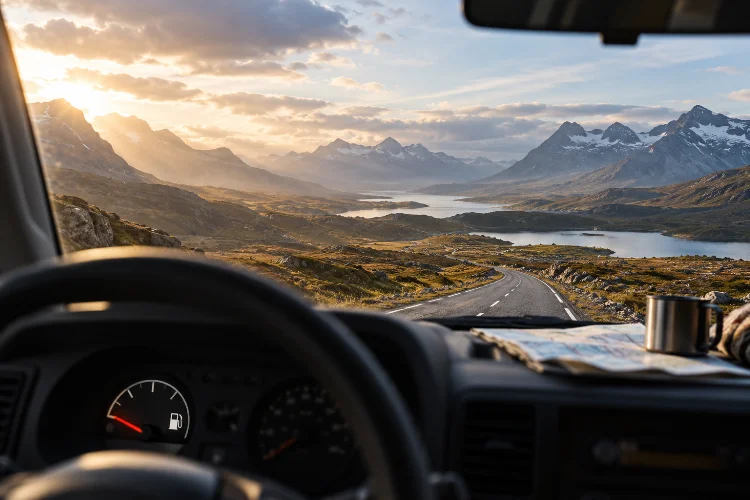
Imagine driving your adventure van through a quiet Alpine valley, surrounded by snow-covered peaks, peaceful forests, and winding mountain roads. You’ve planned the perfect route, found a beautiful overnight stop, and packed enough supplies for several days of exploring.
Then you reach a road closure sign. The mountain pass you’ve been dreaming about won’t reopen for another three weeks. Welcome to one of the biggest challenges of European overland travel: seasonal accessibility.
Planning remote European van expeditions around seasonal access involves much more than selecting beautiful destinations on a map.
Mountain roads, remote camping areas, ferry connections, and even certain hiking routes can become inaccessible depending on snow conditions, weather patterns, and local restrictions.
The good news? With the right approach, seasonal limitations don’t have to ruin your adventure.
Understanding regional travel windows, monitoring road conditions, and designing flexible itineraries can help you explore Europe’s wildest landscapes while avoiding unnecessary risks.
Whether you’re heading towards the Norwegian fjords, crossing the Austrian Alps, or exploring Iceland’s rugged interior, thoughtful preparation can turn unpredictable conditions into a manageable part of the journey.
1. Understanding Seasonal Access Across Europe’s Remote Regions
Europe might look relatively compact on a map, but its landscapes cover an enormous range of climates and elevations.
A coastal road in Portugal could be comfortably accessible while a mountain pass in Austria remains buried beneath snow. Meanwhile, northern Scandinavia may experience winter conditions long after spring has arrived in southern Europe.
Why Seasonal Road Closures Happen
High-altitude roads are particularly vulnerable to snow accumulation, ice, avalanches, and unstable weather.
Some routes close every winter because keeping them open would require extensive maintenance and create significant safety challenges. Others remain technically open but experience temporary restrictions during severe conditions.
Take Norway’s scenic mountain roads, for example. Several routes close seasonally, while others remain accessible throughout the year but may require convoy driving or experience temporary closures.
The distinction matters because a road marked as open on a general map doesn’t necessarily mean it’s accessible on your intended travel date.
Understand Europe’s Different Travel Seasons
Spring can be excellent for exploring lower-altitude regions, but many mountain passes remain closed until snow clearance is complete.
Summer generally provides the broadest opportunities for high-altitude travel, particularly in the Alps and Nordic mountains. However, popular destinations also experience heavier traffic and greater competition for campsite spaces.
Autumn offers quieter roads and beautiful scenery, although shortening days and early snowfall can limit access.
Winter expeditions require considerably more planning, particularly when travelling through mountainous or northern regions.
Rather than treating Europe as one destination with a single travel season, divide your journey into regional accessibility zones.
This approach allows you to match your itinerary with realistic conditions.
2. Choose Remote European Destinations Based on Their Access Windows
One of the smartest ways to design an extended van expedition is to prioritise destinations with restricted access periods.
These are the places where timing genuinely determines whether you can complete your intended route.
Exploring the Austrian and Swiss Alps
Mountain roads such as the Grossglockner High Alpine Road in Austria offer spectacular scenery, glacier viewpoints, and memorable driving experiences.
However, the official Grossglockner website explains that the road generally operates from early May until early November, with winter closure caused by substantial snowfall.
Its exact opening and closing dates depend on conditions, and daily operating hours also apply.
For campervan travellers, this means planning around the official operating season rather than assuming every Alpine road remains accessible throughout summer and autumn.
The Swiss Alps present similar planning challenges, although each pass follows its own maintenance and closure arrangements.
Even during the warmer months, sudden snowfall, roadworks, or landslide risks can interrupt access.
Check the relevant road authority’s latest information before committing to a crossing, especially if your vehicle is large or heavily loaded.
Discovering Norway’s Seasonal Mountain Routes
Norway is an incredible destination for remote campervan adventures, but its mountainous geography demands careful timing.
The Geiranger–Trollstigen Scenic Route includes sections that normally close during winter. According to the Norwegian Scenic Routes authority, historical opening dates for parts of this route have varied considerably between years.
The Hardangervidda Scenic Route provides an interesting contrast.
It is designated as a year-round route, yet winter storms can trigger temporary closures or convoy systems behind snowploughs.
This demonstrates why seasonal access isn’t always a simple open-or-closed question.
For a summer expedition, late June through August may offer a more practical planning window for many mountain experiences, but it still doesn’t guarantee that every road will be available.
Travelling Through Iceland’s Remote Highlands
Iceland’s Highlands are among Europe’s most dramatic overland environments.
Volcanic landscapes, glacial rivers, rugged tracks, and remote mountain scenery make the region extremely appealing to adventurous travellers.
However, many Icelandic Highland F-roads are generally closed from around mid-September until June or July.
SafeTravel Iceland also warns that these routes may involve unbridged rivers, rough surfaces, and conditions unsuitable for ordinary campervans.
A normal two-wheel-drive van shouldn’t be treated as an appropriate Highland expedition vehicle.
Even a four-wheel-drive camper must be suitable for the particular route, and river crossings introduce significant risks that standard vehicle insurance may not cover.
Always verify current access through Iceland’s official road information service before entering remote areas.
3. Build a Flexible Van Expedition Itinerary Instead of a Fixed Schedule
A detailed itinerary is useful, but an inflexible one can become frustrating in remote European regions.
Seasonal access is influenced by natural conditions, and those conditions don’t follow your holiday calendar.
Develop Primary and Alternative Routes
Consider planning three possible routes for each major expedition section.
Your primary route includes the scenic roads and remote destinations you most want to experience.
A secondary route uses more accessible roads while visiting nearby attractions, and a third option provides a lower-risk escape towards established towns and services.
For example, imagine planning to explore Norway’s mountain scenery around Geiranger and Trollstigen.
If a high mountain section remains closed, you can adjust your route using verified open roads rather than waiting indefinitely or attempting an unsuitable alternative.
This doesn’t mean abandoning your adventure. It means keeping the overall journey enjoyable without depending on a single road.
Allow Extra Days for Weather Delays
Remote travel almost always takes longer than expected.
Narrow mountain roads, ferry schedules, roadworks, and unexpected closures can easily change your daily driving plans.
As a practical starting point, consider leaving roughly 15–20% of your itinerary uncommitted.
For a 20-day expedition, that could mean reserving three or four days for delays, rest, or spontaneous exploration.
The appropriate buffer depends on the remoteness of your route and how much flexibility your travel commitments allow.
Avoid scheduling essential ferry departures or fixed accommodation immediately after potentially unreliable mountain crossings.
Prioritise Difficult-to-Access Destinations
Some remote roads are only available during relatively short seasonal windows.
If these routes are essential to your adventure, organise the trip around their expected accessibility rather than leaving them until the end.
More accessible coastal regions, lower valleys, and established towns can provide useful alternatives when conditions change.
This approach works particularly well for long-distance European van travel, where your itinerary might span several countries and climate zones.
4. Monitor Road Conditions, Weather Forecasts, and Access Restrictions
Planning an expedition months in advance is helpful, but conditions can change dramatically during the final days before departure.
A route that looked perfectly reasonable in spring might experience unexpected restrictions shortly before your arrival.
Use Official Road Information Sources
National road authorities should be your primary source for road closures and access updates.
In Norway, the Norwegian Public Roads Administration provides traffic information, while the Norwegian Scenic Routes website includes seasonal details for individual tourist roads.
For Iceland, the official traffic information service at umferdin.is/en provides road-condition information.
In Alpine regions, check the road operator or relevant national and regional authority.
Navigation apps remain useful for estimating travel times, but they shouldn’t replace official reports when assessing remote road accessibility.
Watch More Than the General Weather Forecast
A forecast showing clear skies doesn’t necessarily mean mountain roads are safe.
Snow remaining from previous storms, strong winds, freezing temperatures, and unstable slopes can all create dangerous conditions.
Pay particular attention to overnight temperatures, precipitation forecasts, wind warnings, and potential avalanche hazards.
Mountain weather can change quickly, sometimes creating conditions very different from those in nearby valleys.
Check forecasts at the actual elevation of your route rather than relying entirely on weather information for the closest town.
Make Daily Route Checks Part of Your Routine
Before starting each remote driving day, confirm the latest access information.
Check your primary route, identify an alternative, and estimate how much daylight remains for safe travel.
It’s also worth checking whether fuel stations, ferries, visitor facilities, or campsite services operate seasonally.
This small amount of daily preperation can prevent expensive detours and unnecessary stress.
5. Prepare Your Adventure Van for Changing European Seasons
A reliable vehicle is essential for remote travel, but seasonal conditions can expose weaknesses that ordinary driving rarely reveals.
Cold temperatures, steep gradients, gravel surfaces, and prolonged isolation place additional demands on your campervan.
Choose Appropriate Tyres and Driving Equipment
Tyre selection should reflect the conditions you’re likely to encounter.
Winter tyres or other approved winter equipment may be legally required in certain countries or under particular weather conditions.
The European Union’s Your Europe guidance explains that road safety requirements, including winter tyre regulations, vary between countries.
Check the rules for every country on your route rather than assuming one set of regulations applies throughout Europe.
Also consider tyre load ratings, tread condition, and the suitability of your vehicle for narrow mountain roads.
A campervan designed for paved highways isn’t automatically suitable for rough Highland tracks or difficult gravel routes.
Protect Your Water and Electrical Systems
Cold-weather travel can create problems inside the vehicle as well as on the road.
Exposed freshwater pipes, external tanks, and wastewater systems may freeze when temperatures remain below zero.
Consider suitable insulation, frost protection, and manufacturer-approved heating arrangements where appropriate.
Your electrical system also deserves attention.
Lithium battery charging may be restricted at low temperatures, while short winter days can substantially reduce rooftop solar generation.
A properly configured DC-DC charging system, sufficient battery storage, and access to shore power can help maintain electrical reliability.
Review Vehicle Weight and Mechanical Condition
Additional winter equipment can quickly increase your vehicle’s overall weight.
Heavy clothing, recovery equipment, spare supplies, extra water, and larger battery systems all contribute to the load.
Check the vehicle’s gross weight and axle limits before departure.
Inspect brakes, cooling systems, suspension components, and tyres, particularly if your itinerary includes long mountain descents.
Reliable braking and sensible load distribution are considerably more important than fitting unnecessary adventure accessories.
6. Understand Camping Regulations and Environmental Restrictions
Finding a remote place to park doesn’t automatically mean you’re allowed to spend the night there.
Overnight parking, camping, and vehicle access are regulated differently across European countries, regions, and protected landscapes.
Norway’s Right to Roam Has Important Limits
Norway’s allemannsretten, commonly known as the right to roam, provides extensive opportunities for outdoor recreation.
However, this freedom doesn’t give motorhomes unrestricted permission to drive or park wherever they like.
Visit Norway explains that campervans must comply with vehicle access regulations, parking restrictions, and local signage.
Travellers should avoid driving off-road, respect private land, and maintain suitable distances from buildings and residences.
Dedicated motorhome pitches and authorised campsites are often the simplest options, particularly near popular attractions.
Iceland Has Stricter Campervan Overnight Rules
Iceland provides an especially important example of why researching local regulations matters.
The Environment Agency of Iceland states that spending the night in campervans outside organised campsites or permitted urban areas is generally prohibited without permission from the landowner or rights holder.
Additional restrictions may apply within protected areas.
This means finding an empty gravel track beside a beautiful landscape doesn’t automatically give you permission to camp there.
Plan overnight stops seperately from your driving route and verify that suitable accommodation facilities are operating during your travel dates.
Follow Responsible Overlanding Practices
Remote landscapes are often ecologically sensitive.
Avoid driving across vegetation, creating unofficial tracks, or disturbing wildlife to reach scenic parking spots.
Dispose of wastewater and toilet waste only at appropriate facilities.
Respect seasonal restrictions intended to protect wildlife, maintain public safety, or prevent environmental damage.
Responsible travel helps preserve access to the landscapes that make European overlanding so rewarding.
7. Build Safety Margins Into Every Remote European Expedition
The most memorable adventures often involve uncertainty, but unnecessary risk shouldn’t be part of the experience.
A well-prepared expedition accounts for mechanical problems, unexpected weather, and the possibility of spending longer in remote locations than planned.
Calculate Fuel, Water, and Food Reserves
Remote European routes can involve substantial distances between services.
Fuel stations may be limited, and some seasonal businesses close outside the main tourism period.
Estimate the driving range available from your vehicle’s fuel tank, then establish realistic refuelling points.
For example, a van consuming 10 litres per 100 kilometres would theoretically require 40 litres for a 400-kilometre journey.
However, steep gradients, low-speed driving, cold weather, and difficult surfaces can increase consumption.
Maintain a suitable reserve rather than planning to arrive with an almost empty tank.
Water and food supplies deserve similar consideration, particularly when travelling away from established towns.
Prepare for Limited Mobile Coverage
Remote valleys, mountainous regions, and isolated northern roads may offer unreliable mobile reception.
Download offline maps and keep essential route information accessible without an internet connection.
For more isolated journeys, consider an appropriate satellite communication device with emergency messaging capability.
Share your planned route and expected check-in times with a trusted contact.
If your journey includes walking or hiking away from the vehicle, assess those activities seperately from the driving route and carry suitable emergency equipment.
Know When to Turn Around
Sometimes the smartest decision is abandoning a particular route.
Unexpected snow, deep water, deteriorating road surfaces, or strong winds can make further progress unsafe.
Don’t assume that having four-wheel drive automatically makes difficult conditions manageable.
If an access road is officially closed, respect the restriction.
The same applies when conditions exceed your experience, equipment capability, or available safety margins.
A remote expedition isn’t a competition to reach the most isolated location.
The real achievement is enjoying remarkable destinations while returning safely and leaving the environment undamaged.
Review Your Plans as Conditions Change
Before entering another country or remote region, recheck road regulations, travel documentation, vehicle insurance, and breakdown assistance coverage.
Border requirements can differ between European destinations, and the Schengen Area isn’t identical to the European Union.
Make sure your planned journey complies with the entry and length-of-stay rules applicable to your nationality.
During the expedition, review your route occassionally and adjust it based on fresh information.
That flexibility is often what makes a long-distance van adventure successful.
Planning remote European van expeditions around seasonal access is essential for exploring Europe’s mountains, coastlines, and isolated landscapes safely.
Understanding regional opening windows, monitoring official road conditions, and keeping alternative routes available can make a significant difference to your overall experience.
Preparation also extends beyond navigation. Your campervan must suit the expected conditions, camping arrangements need to comply with local regulations, and emergency supplies should reflect how remote your destination really is.
The secret to a successful expedition isn’t creating the most ambitious itinerary possible. It’s building a realistic plan with enough flexibility to respond when nature changes the rules.
Before setting off, identify your essential seasonal routes, confirm access through official sources, and prepare suitable alternatives.
With smart planning and a willingness to adapt, Europe’s remarkable remote landscapes can become the foundation of an unforgettable adventure.
